

Recognizing Grief
Grief shows up in more ways than you might think
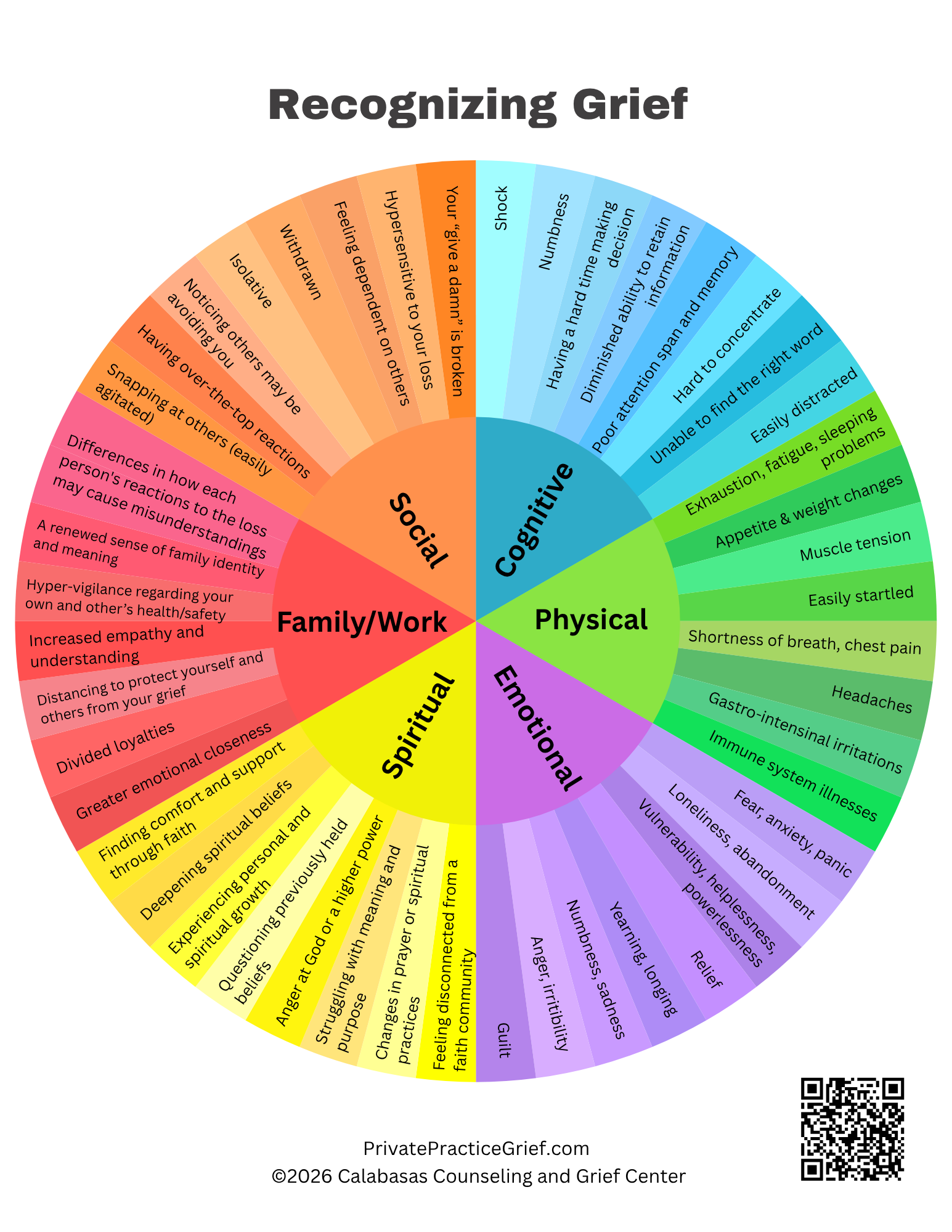
What is grief?
Grief is a natural response to loss, but it manifests differently for everyone. Understanding the signs of grief can help you or someone you care about navigate this complex emotional process. Below, we outline the various ways grief can affect us physically, emotionally, cognitively, spiritually, socially, and within family or work settings.
What are some common symptoms of grief and grief reactions?

Cognitive symptoms of grief
Shock: Difficulty processing the reality of the loss.
Numbness: Difficulty feeling emotions or connecting to the reality of the loss.
Difficulty Making Decisions: Feeling overwhelmed by choices.
Diminished Ability to Retain Information: Forgetfulness or confusion.
Poor Attention Span and Memory: Struggling to retain details or focus.
Hard to Concentrate: Difficulty staying on task.
Unable to Find the Right Word: Disruption in verbal expression.
Easily Distracted: Difficulty maintaining focus.

Physical symptoms of grief
Exhaustion: Persistent fatigue or low energy levels.
Fatigue and Sleep Disturbances: Trouble sleeping or oversleeping.
Appetite & Weight Changes: Overeating or loss of appetite.
Muscle Tension: Aches or tightness in the body.
Easily Startled: Heightened physical responses.
Shortness of Breath: Feeling physically constricted.
Headaches and Chest Pain: Physical discomfort caused by emotional strain.
Nausea and Gastrointestinal Issues: Stomach upset or illness.
Immune System Illnesses: Increased susceptibility to sickness.
Disclaimer:
Physical symptoms associated with grief, may overlap with symptoms of medical conditions. While these are common responses to loss, it’s essential to encourage clients to consult a healthcare professional if symptoms persist, worsen, or cause significant concern. Addressing physical health alongside emotional and mental well-being ensures a comprehensive approach to healing.

Emotional symptoms of grief
Fear, Anxiety, and Panic: Overwhelming feelings of worry or dread.
Loneliness and Abandonment: Feeling isolated or left behind
Vulnerability, Helplessness, Powerlessness: Feeling emotionally exposed or unable to influence outcomes.
Numbness and Sadness: Feeling disconnected or deeply sorrowful.
Anger and Irritability: Irritation or frustration toward the loss or others.
Yearning and Longing: Deep desire for connection or the presence of what’s been lost.
Relief and Guilt: Complex emotions often intertwined.

Spiritual symptoms of grief
Finding comfort and support through faith: Reassurance, connection, and hope drawn from spiritual beliefs, rituals, or faith communities.
Deepening spiritual beliefs: Strengthens faith or deepens a sense of connection to something greater.
Experiencing personal and spiritual growth: Greater compassion, renewed appreciation for life, and clarity around what matters most.
Questioning previously held beliefs: Reevaluating beliefs once accepted without question.
Anger at God or a higher power: Feeling abandoned, betrayed, or angry that the loss occurred.
Struggling with meaning and purpose: Difficult questions about suffering, fairness, and the purpose of life.
Changes in prayer or spiritual practices: Difficulty engaging in rituals or practices that once felt comforting.
Feeling disconnected from a faith community: Feeling misunderstood, judged, or isolated within a spiritual or religious community.

Family/Work symptoms of grief
Differences in Reactions: Challenges caused by varying grief responses within a group.
A renewed sense of family identity and meaning: Families often create new traditions, rituals, and ways of honoring the person or relationship that was lost.
Hyper-Vigilance: Increased concern for loved ones’ or coworkers’ well-being.
Increased empathy and understanding: Family members may develop a greater appreciation for each other's experiences and struggles.
Distancing: Avoiding others to manage personal grief.
Divided Loyalties: Feeling torn between personal grief and family/work obligations.
Greater emotional closeness: Shared loss can deepen bonds and foster a stronger sense of connection and support.

Social symptoms of grief
“Give a Damn” is Broken: Struggling to care about daily matters.
Hypersensitivity to Loss: Heightened awareness of personal grief.
Feeling Dependent on Others: Increased need for support.
Withdrawn and Isolative: Pulling away from social interactions.
Noticing Avoidance by Others: Observing others avoiding discussions about grief.
Over-the-Top Reactions: Intense responses to minor events.
Easily Agitated: Snapping or reacting strongly to small issues.
To deepen your understanding of grief and enhance your ability to support clients, explore the specialized online trainings offered by Private Practice Grief. Our programs are uniquely tailored for mental health professionals, focusing on contemporary grief theories, practical skills for empathetic listening, narrative therapy techniques, and psycho-educational resources. We also address diverse grief experiences, such as pet loss, family dynamics, and cultural perspectives on mourning, equipping you with tools to guide clients through their healing journeys. Join a community of professionals dedicated to compassionate, evidence-based grief counseling. Keep updated on any new online trainings by joining our Facebook group or following my Instagram.
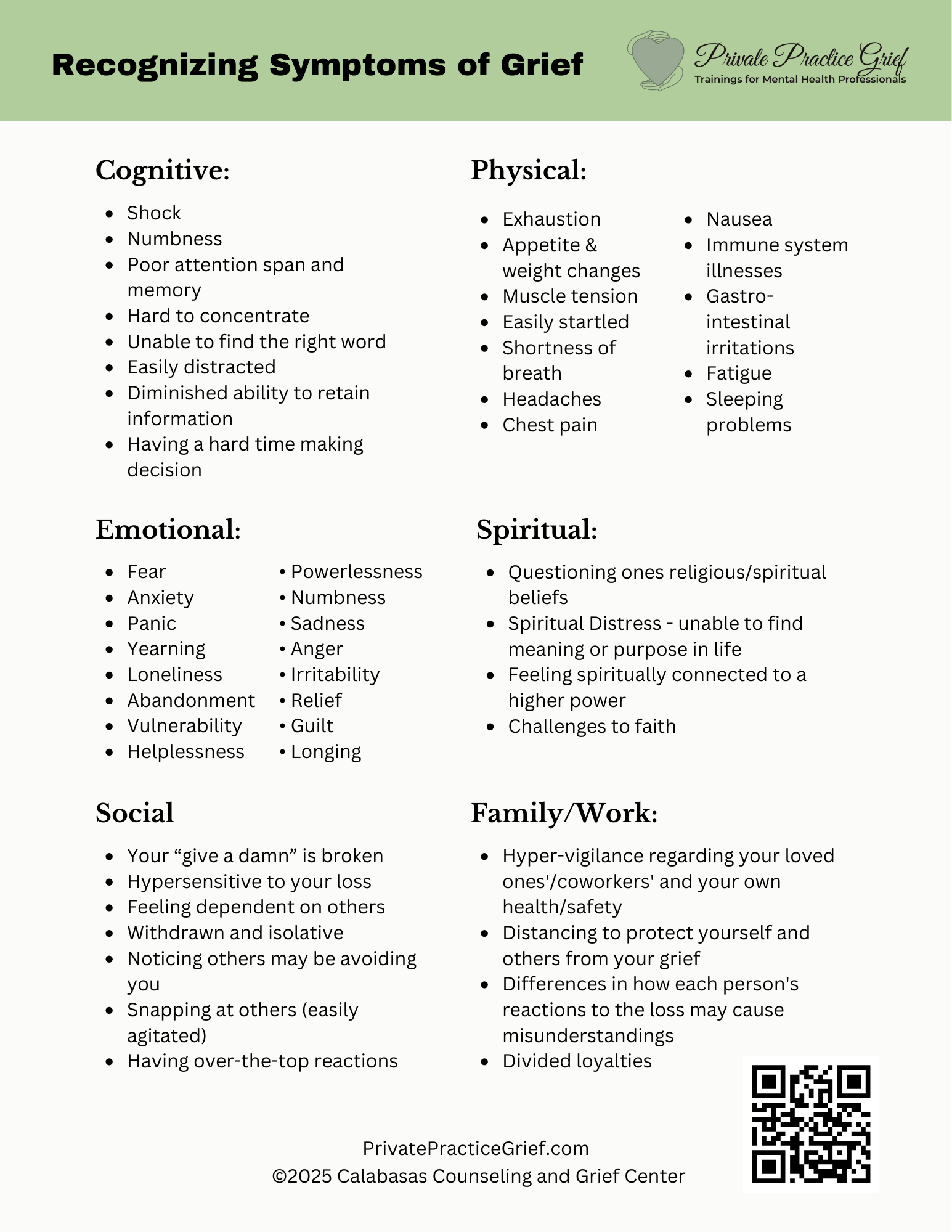
Previous List Version:
Read more
-

Unhelpful Things Therapists Say & Do
Secrets told to a grief therapist about experiences with well-meaning clinicians
-

Types of Losses
Grief has often been only associated with the death of a loved one.